Global Think Tank & Policy Studies
From Reactive Government to Anticipatory Public Services
The Zero-Click Government Institute explores how data, artificial intelligence and digital public infrastructure can enable governments to act before citizens need to ask.
"If governments know enough to anticipate risk, the real question is why they still wait for citizens to ask."
The Problem
Governments still wait for citizens to ask
States have digitalized processes, but they remain fundamentally reactive. What was digitized was the form, not the service. The underlying logic remained the same.
Rights arrive late. Services require navigation. Inequality compounds through friction. The bureaucracy ceases to be merely an instrument of implementation and begins to act as a selective mechanism.
"She was seven months pregnant when she lost her job. The income disappeared in the same month. From the State's perspective, nothing had started yet. The first appointment at social assistance came weeks later. The benefit was granted, within the predicted deadlines. When the resources finally arrived, her son had already been born and the debts had already been contracted. The right was recognized. The moment when it would have made a difference had already passed."
Zero-Click Government, Ch. 4: Administrative Time and Social Time
When public action depends on the request, the effort to activate the State is shifted to the individual.
Existing social differences become differences in access to rights themselves. Administrative complexity operates as a silent filter. It does not exclude explicitly. It produces delay, withdrawal, and invisibility.
Administrative time is organized in stages, deadlines and validation rites.
Social time is marked by events, ruptures and urgencies. When these two temporal regimes do not meet, a policy can exist, a service can be rendered, and yet fail to produce the effect that justified its existence.
The problem is not technology. It is institutional timing.
The Thesis
What is Zero-Click Government?
Government recognizes life events automatically
Services activate without citizen requests
Data infrastructure enables anticipation
Citizens receive rights without friction
"The transition toward proactive government is not a political choice or a technological experiment. It is the natural consequence of an expanding institutional capacity."
When states possess the information necessary to recognize relevant events in people's lives, the question shifts from whether they can act earlier to how that capacity should be exercised responsibly.
The Challenges Ahead
With great capacity comes new responsibilities
Normative Questions
When should the state act without being asked? Anticipation expands the field of political responsibility in ways democratic theory is still working through.
Political Coordination
Acting on life events requires siloed agencies to operate in concert. This is a profound challenge to the fragmented architecture of modern government.
Power & Data Governance
The same infrastructures enabling timely help may concentrate informational power in unprecedented ways, raising questions of oversight and democratic control.
Paradoxes of Capacity
Greater capacity to help creates greater capacity to intervene. Systems that reduce inequality can also produce new forms of intrusion if not governed carefully.
Accountability Without Requests
When government acts before being asked, who is responsible? Automated action requires new frameworks for transparency, redress, and legitimacy.
A proactive state must never become an intrusive state. A capable state must remain a responsible state. And a technologically sophisticated government must always remain, above all, a human one.
Research
Research and Ideas
"The principal limitation of contemporary digital government does not lie in the absence of technological tools, but in the persistence of an action model structured to respond after the request, and not to recognize the context."
How AI and digital infrastructure can help governments act before citizens ask
Gustavo Maia · World Economic Forum
Implementation Lab
From theory to implementation
The Implementation Lab works with governments to design and test proactive public services.
"The challenge is not to eliminate the State nor to dissolve its responsibilities, but to reorganize its action so that public presence ceases to be episodic and becomes structural in the promotion of rights and reduction of inequalities."
Pilots
Real-world experiments in anticipatory governance
Tools
Frameworks and instruments for proactive service design
Playbooks
Step-by-step guides for government teams
Pilot: Niterói, proactive urban services
Global Observatory
Where proactive government is emerging
Governments around the world are beginning to experiment with anticipatory public services.
Estonia
Singapore
Barcelona
Piauí, Brazil
Canada
UAE
Debates
Debates and Dialogues
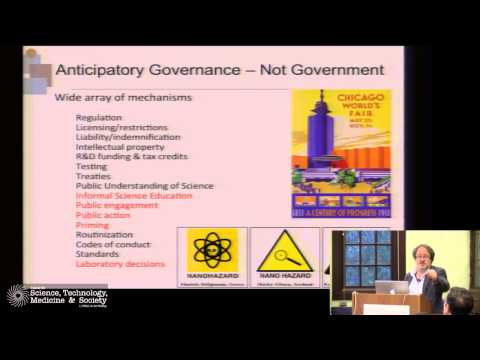
David Guston
Understanding Anticipatory Governance
David Guston explains the foundations of anticipatory governance and why governments must think proactively about emerging technologies.

Mo Gawdat
Humans and Algorithms: Government Services in an AI Era
Mo Gawdat discusses how artificial intelligence is transforming government services and what it means for the future of public administration.

Don Moynihan
Policymaking by Other Means: Administrative Burden
Professor Don Moynihan on how administrative burden has become a deliberate policy tool affecting millions of lives through confusing paperwork.

The Book
The book that started the debate
Gustavo Moreira Maia
Zero-Click Government explores how the State can move from reactive bureaucracy to anticipatory public services, and what institutional, political and normative conditions this transition demands.
"While the State depends on the citizen as the main integrator of its own information, its capacity to act in a coordinated, preventive and equitable manner will remain restricted."
Afterword by Beth Simone Noveck
Zero-Click Government: Omakase or Loss of Agency?
In the afterword to the book, Beth Simone Noveck, Director of The GovLab and former U.S. Deputy CTO under President Obama, reflects on the democratic implications of anticipatory governance and argues that if governments are going to act on inferred rather than expressed demand, participation, accountability, and public oversight must be embedded into how these systems are designed and governed from the start.
"We anticipate a child's needs without hesitation, feeding her before she is hungry. But choosing for an adult is rarely the omakase experience; it is more often experienced as a loss of agency. The safeguards that matter most are those that prevent anticipatory government from becoming a kitchen where the citizen never sees the menu."
"The unanticipated consequence of governing in advance is that it concentrates interpretive power in the hands of those who design the data systems, set the thresholds, and define what counts as a life event. The antidote is not to slow down anticipatory capacity but to democratize it."
Beth Simone Noveck
Director of The GovLab · Published on Reboot Democracy, May 2026
Community
A global community
Policymakers, researchers and practitioners working to redesign the State.
0+
Fellows
0+
Contributors
0
Government Partners
Support the Institute
The institute is supported by philanthropic organizations, research partners and institutions interested in the future of public services.
Institutional Support